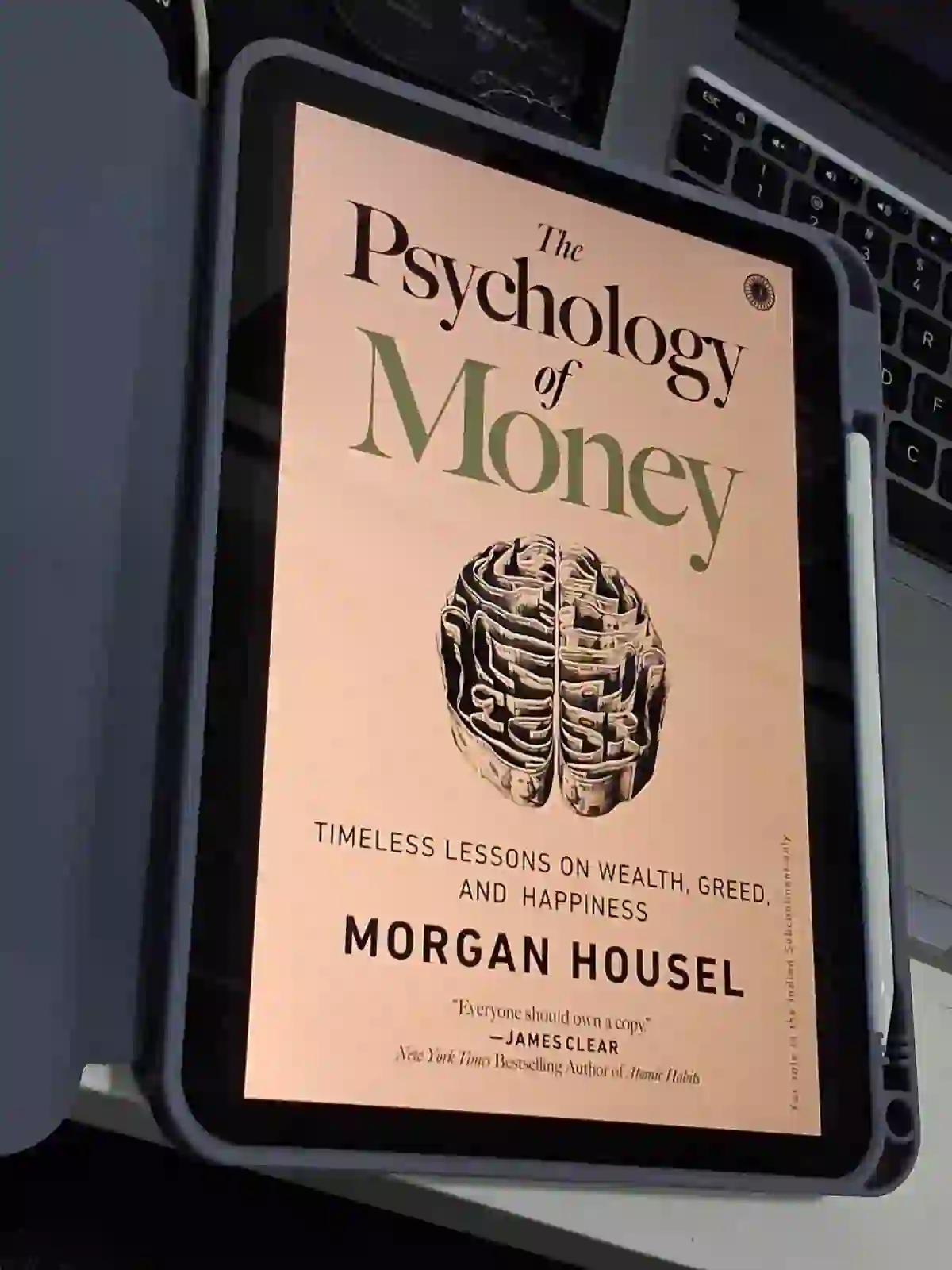
Why I Recommend This Book
“The Psychology of Money” by Morgan Housel is one of those rare books that makes you rethink things you thought you already understood. It isn’t a book about stock-picking or financial formulas — it’s about how our emotions, biases, and life experiences shape every financial decision we make.
Housel breaks the book into 19 short, self-contained chapters, each built around a core idea:
- Luck and Risk - Success and failure are never purely the result of skill or poor decisions; randomness plays a far bigger role than we admit
- Getting Wealthy vs. Staying Wealthy - The skills needed to build wealth are very different from those needed to keep it
- Tails Drive Everything - A small number of events account for the majority of outcomes in investing and in life
- The Role of Time - Compounding is powerful beyond intuition, and patience is an underrated financial skill
Key Takeaways
1. Behavior Matters More Than Knowledge
You don’t need to be the smartest person in the room to build wealth. What matters more is avoiding catastrophic mistakes, staying the course during downturns, and not letting emotions drive your decisions. A person with average financial knowledge but great self-control will outperform a financial genius who can’t manage their own behavior.
2. No One is Crazy
“People do some crazy things with money. But no one is crazy.”
Everyone grew up with a different relationship with money. Someone who lived through the Great Depression sees risk very differently than someone who grew up during a decades-long bull market. Our financial decisions make sense given our own experiences — even when they look irrational from the outside.
3. Enough is a Superpower
One of the most striking ideas in the book is the concept of “enough.” The goal of getting wealthy often shifts constantly — once you reach a milestone, you want more. Housel argues that knowing when you have enough, and resisting the urge to risk what you have for what you don’t need, is one of the most important financial skills there is.
4. Save Without a Reason
Most people save for something — a house, retirement, an emergency. Housel makes the case for saving without a specific goal: to build optionality. Having money saved buys you choices, flexibility, and freedom in ways that are hard to predict in advance but incredibly valuable when the moment arrives.
Who Should Read This
This book is for anyone — whether you’re just starting to think about money, deep into investing, or somewhere in between. It doesn’t assume any prior financial knowledge. The writing is clear, the stories are engaging, and the lessons stick.
Rating
⭐⭐⭐⭐⭐ (5/5)
One of the most readable and genuinely useful books about money I’ve come across.